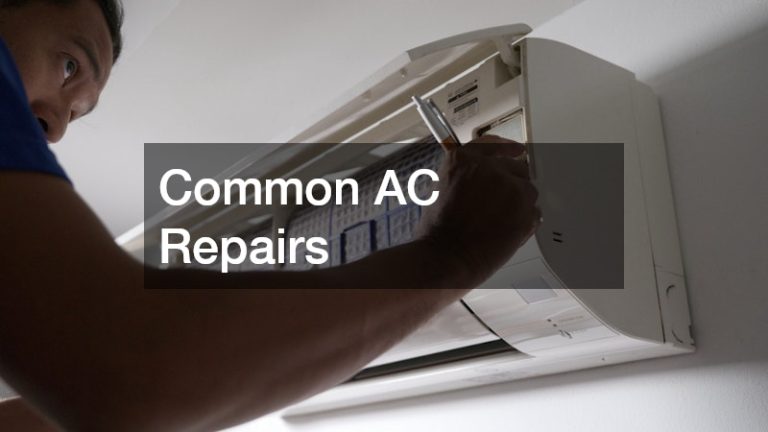
When the sweltering heat of summer arrives, your air conditioning system becomes the most vital appliance in your home, providing a cool, comfortable sanctuary from the oppressive temperatures outside. A functioning system is essential for maintaining good indoor air quality and keeping humidity levels in check. However, like any complex system, an air conditioner is subject to wear and tear. Constant use puts significant strain on the various components that make up your cooling system. Eventually, you might find yourself in need of professional AC repair to restore your home’s comfort.
Understanding the most frequent issues that plague cooling systems can help you identify problems early, potentially saving you from complete system failures. Here is a comprehensive guide to common problems.
Refrigerant Leaks
The refrigerant is the lifeblood of your air conditioning system. It absorbs heat from the indoor air and releases it outside. A common misconception is that air conditioners consume refrigerant over time. In reality, the system is completely sealed. If your system is low on refrigerant, it means there is a leak somewhere in the lines. Simply topping off the fluid is not a permanent solution; a qualified technician must locate the leak, fix the line, and then charge the system with the precise amount of refrigerant specified by the manufacturer. Signs of a leak include warm air blowing from vents, hissing noises, and ice building up on evaporator coils.
Frozen Evaporator Coils
The evaporator coil absorbs heat from your indoor air and is filled with cold refrigerant. Strangely enough, these coils need a constant flow of warm indoor air circulating over them to function correctly. If airflow is restricted, the coils can become too cold, causing condensation to freeze. When ice encases the evaporator coil, it creates an insulating barrier preventing the refrigerant from absorbing heat. The result is an air conditioner that runs continuously but only blows warm air. Common culprits for restricted airflow include dirty air filters and malfunctioning blower motors. Checking and replacing your air filter regularly is your best defense.
Dirty Condenser Coils
While the evaporator coil sits inside your home, the condenser coil is located in the outdoor unit. Its job is to expel the heat absorbed from your indoor air. Because it is exposed to the elements, the condenser coil can quickly become coated in dirt, leaves, and grass clippings. When enveloped in grime, heat transfer is severely impeded. The compressor must work harder to achieve the desired temperature, increasing your energy consumption and putting immense stress on the system. Over time, this added strain can lead to premature compressor failure. Keeping the area around your outdoor unit clear prevents this issue.
Fan Problems
Your air conditioning system relies on two primary fans to circulate air. The indoor blower fan pushes cool air through your ductwork, while the outdoor fan pulls air over the condenser coils to dissipate heat. These fans are powered by motors that can suffer from various ailments. Worn belts, lack of lubrication, dirt buildup, or electrical issues can cause a motor to run sluggishly or fail. If you hear screeching, grinding, or rattling noises coming from your system, a fan motor is likely failing. Ignoring these sounds can lead to a complete breakdown, requiring immediate AC repair to restore airflow.
Leaking Ductwork
The ductwork acts as the circulatory system for your air conditioner, delivering cooled air throughout your home. Unfortunately, ducts are often installed in unconditioned spaces like attics or basements. If the ducts have holes, gaps, or disconnected joints, a significant portion of the cold air will escape into these unused areas before it reaches your vents. This forces your air conditioner to work overtime to cool your living spaces and drastically inflates your monthly utility bills. Having your ductwork professionally inspected and sealed with specialized metal tape or mastic sealant can dramatically improve your system’s efficiency and overall performance.
Sensor and Thermostat Malfunctions
Sometimes, the problem does not lie within the heavy machinery of the air conditioner itself, but rather with the controls. Room air conditioners feature a thermostat sensor located behind the control panel, which measures the temperature of the air entering the evaporative coil. If this sensor is knocked out of position, the air conditioner could cycle constantly or behave erratically. Similarly, wall-mounted thermostats can lose their calibration over time or suffer from faulty wiring. Ensuring the thermostat is not exposed to direct sunlight or drafts is also critical for accurate temperature readings. Upgrading to a modern programmable or smart thermostat can resolve many of these control issues and improve home efficiency.
An air conditioning system is a significant investment requiring regular attention to perform optimally. By scheduling annual preventative maintenance, replacing your air filters regularly, and keeping an ear out for unusual noises, you can circumvent many of these frequent issues. However, when complex mechanical or electrical problems arise, it is always best to call a licensed professional. Attempting to fix intricate components yourself can be dangerous and may void your warranty. Prompt and expert AC repair ensures that your system operates safely, efficiently, and reliably for many summers to come, keeping your home perfectly comfortable all season long.